Pages

Showing posts with label blockchain. Show all posts

Tuesday, February 16, 2021

Building Equity In The Translation Workflow With Blockchain

This is a guest post by Bob Kuhns on the subject of blockchain use in the translation industry. He presents a very "simple" model where he shows how a blockchain could enable an ongoing,  robust, and trusted Buyer to Translator business connection that could quite possibly reduce the role of LSP middlemen whose primary value-add in business translation work today is project management services and coordination. Though this is a valuable service, it often significantly increases the cost of translation, and also sometimes creates discord, disgruntlement, and enmity amongst the freelance translation-service suppliers who ultimately do the work. 

A blockchain solution is not just about technology, it’s about solving business problems that have been insolvable before due to the inability of the ecosystem to share information in a transparent, immutable, and trusted manner.  

 LSPs continue to struggle in their communications on translation quality and the value of ongoing project services and thus it theoretically seems that a blockchain that did in fact deliver direct-to-buyer translation services that are trusted, reliable and predictable would indeed be a great step forward for the business translation industry. This is also exactly the primary reason why some in the LSP sector would not want blockchain to succeed. However, there is also a role for a more enlightened LSP in a functioning translation blockchain, one committed to transparency, equitable sharing of business value and benefits, and ultimate customer success in all their globalization initiatives.    

Blockchains show potential to address key concerns of our digitally-driven lives, such as a lack of transparency, accountability, verifiable identity, and control of dataBlockchain has the potential to enable defined quality to be delivered at a defined price in a defined timeframe with minimal administration overhead. The extent that it is able to do this in a clean and trusted way will likely drive its adoption. Blockchains are poised to catalyze new business models by cutting the costs of verifying the truth.  

Explanations of blockchains tend to get complicated quickly. However, in very basic language, blockchains help us certify that something is true, without someone in the middle doing checks and balances.  But recent translation market activity perhaps points to some of the vital building blocks to making blockchain more real in the translation industry.     

What might some of the elements to make a functional blockchain in the translation industry possible be? 

  • A robust TMS platform that could enable ANY buyer (not just localization buyers) to engage ANY translator to perform a necessary translation task.
  • Assistive translation technology that can be easily connected into a blockchain workflow (MT, TM, NLP Tools)
  • The ability to create self-sovereign data that would allow more equitable sharing of data. In the vision of many pioneers in the blockchain space, the “ownership” of data would switch from the organization that gathers it to the individual or organization that contributed it.
  • An Independent Translator rating, certification, ranking, identification database to enable competent resources to be identified and selected. 
  • Smart Contracts
  • And....

For those who think blockchain is still a distant dream, there is evidence that it is making meaningful headway in improving efficiency, accuracy, and transparency in some areas that have historically been project-management nightmares. The members of Tradelens, a blockchain joint venture between IBM and the shipper Maersk, control more than 60% of the world’s containership capacity. Seriously, do we really believe that a translation task has more variance and unplanned changes than these goods and trade flows? Watch the short movie clip at the link above to see it at work. Having trusted food quality from all over the world is perhaps an even more challenging scenario. Food Trust is a blockchain ecosystem that covers more than 100 organizations, including Carrefour and the top four grocery retailers in the U.S.     

It is quite likely that the old guard (executives, managers, and localization teams) will not be at the forefront of translation blockchain if it ever does become a reality. Mostly because they are "just too old, too tired, and too blind " as the movie says. Change is most often driven by the young who see the new potential and have the motivation in solving old enduring problems. 

"Disruption could also be spurred by an even younger generation. New York Times writer David Brooks traveled to college campuses to understand how students see the world. In a story, he wrote after the experience, starkly titled “A Generation Emerging from the Wreckage,” Brooks describes a cohort with diminished expectations. Their lived experience includes the Iraq war, the financial crisis, police brutality, political fragmentation, and the advent of fake news as a social force. In short, an entire series of important moments in which “big institutions failed to provide basic security, competence, and accountability.” To this cohort, in particular, blockchains’ promise of decentralization, with its built-in ability to ensure trust, is tantalizing. To circumvent and disintermediate institutions that have failed them is a ray of hope—as is establishing trust, accountability, and veracity through technology, or even the potential to forge new connections across fragmented societies.

This latent demand is well aligned with the promise of blockchains. While it’s a long road to maturity, these social forces provide a receptive environment, primed and ready for the moment entrepreneurs strike the right formula. "             

Alison McCauley, author of Unblocked 


===============


News recently has shed light on unfair work arrangements for freelancers or “gig workers” with Uber being a prominent example, and now more industries have begun to examine their relationships with freelancers. Though on a modest scale, this self-examination has come to the translation industry as well. The proposed translation model is grounded on the idea that blockchain can bring equity to translators while streamlining the translation workflow.

The Realization For Change

Even before the pandemic, the translation industry was changing and self-reflecting. NMT took center stage and the less-than-equitable working relationships for translators gained notice [1]. In “The State of the Linguist Supply Chain,” Common Sense Advisory examined the translation supply chain from the perspective of over 7,000 linguists, 75% of whom are freelancers representing 178 countries and 155 language pairs [2]. This data-rich survey identified many discrepancies between translators/linguists and their clients - the Buyers of translations and LSPs.

Several illustrative takeaways are:

  • Over half (54%) of the respondents could not live solely on their translation income.
  • Linguists are attracted to the translation profession because of flexible hours (91%) and the diversity of projects (75%). Only 33% rated their pay as being a plus.
  • The frustrations of linguists include fluctuating income (65%), irregularity of work (57%), and lack of respect (25%).
  • There is a preference for working for clients (65%) because translators (80%) earn more, have more job flexibility (56%), and quicker payments. Clients (76%) pay in less than 30 days compared with only 32% with LSPs.
  • The largest benefit of working for LSPs is more work (71%).
  • Translators perceived that cost (40%) and speed (33%) are more important than

Some of the largest challenges facing translators are finding clients (55%), negotiating prices (50%), dealing with tight deadlines (35%). Just before the pandemic, linguists felt the market changing to lower prices (64%) and faster turnaround times (56%).

Though not included here, linguists’ comments found in the report provide a more human context of their jobs than the raw percentages.


The Standard Model and Its Beneficiaries

The current translation workflow is one where translation Buyers hire LSPs to provide translators and manage the translation process including day-to-day project management, translation reviews, source-target file transfers, and handling of invoicing/payments between Buyers and translators. Even with translation management systems (TMSs), the tasks of LSPs are still mostly manual with continual updates to project status and translation reviews. In short, LSPs orchestrate the translation process and relieve Buyers from needing dedicated localization departments.

Who Benefits From the Standard Model

The primary beneficiaries of the Standard Model are Buyers which can have their content translated without investing heavily in a localization team and the LSPs. While LSPs do provide a much-needed project management function, they are in control of the purse strings and, like other businesses, they exist to maximize their share of the purse.

Weaknesses of the Standard Model

Inadequacies range from workflow issues to fairness.

Project management overhead is a glaring inefficiency. Despite the use of TMSs, there is simply too much human administration and intervention throughout a project.

Translation delays can result from time differences between LSPs and their geographically-dispersed pool of translators especially when issues can not be resolved promptly.

Security is a major problem for the Standard Model. LSPs do not know who is actually doing the translating. Online MT engines have been used to translate texts risking exposure of propriety material. [3]

The inequity of the Standard Model, where the Buyer wants to minimize translation costs and the LSPs want to maximize their profits, leaves [especially freelance] translators at the bottom of the food chain.


A Blockchain-based Translation Workflow

Breaking with the Standard Model, the proposed translation workflow reduces human administration and improves translation workflows with blockchain as the backbone [4]

Blockchain, smart contracts and oracles are the key pieces of the proposed workflow. A blockchain is a decentralized ledger of immutable, encrypted records (blocks) securely denoting asset transfers such as source/target files. Since each block on a blockchain contains the identifiers of a provider and recipient of an asset, the provenance of an asset is traceable.

A smart contract is a computer protocol that is intended to enforce the execution of a contract without a third party. Smart contracts could facilitate direct source-target file transfers between Buyers and translators and quicker payment for translators when projects are completed. These transactions are trackable and irreversible.

For a wide set of applications, a blockchain, actually, a smart contract, might require real-world information. Fulfilling that need, a blockchain oracle is an entity providing network-external data through an external transaction. Linguists and MT engines are examples of oracles receiving data (source files) and sending data (target files) to a translation blockchain workflow.

Figure 1: Blockchain Translation Schematic

A skip through the workflow

While the SkipThrough of the blockchain translation schematic (Figure 1.) glosses over many details of the translation process, it points to where the human workflow administration performed by LSPs is completed by smart contracts with a blockchain recording the handoffs of files and payments.

  1. As with the Standard model, a Buyer assembles source documents and project requirements including target languages, linguistic assets (terminologies and TMs), budgets, and schedules.
  1. The source content, linguistic assets, and requirements are recorded on a blockchain.
  1. Smart contracts execute throughout the workflow directing texts to TMs, then to MT engines, or directly to MT engines or translators. Each file transfer is recorded on the blockchain.
  1. Based on MT review acceptability, smart contracts initiate transfers of translations to Translators/MTPEs for review. The blockchain records the translation transfers.
  1. Once a reviewer approves the translations, a smart contract executes, thereby sending translated material to the Buyer. The blockchain is updated.
  1. The buyer’s acceptance of the completed translations invokes a smart contract that sends payment to the Translators/MTPEs. The blockchain records the details of payments.


Who Benefits from the Blockchain Model?

The Buyers and Linguists are the primary beneficiaries. That is not to say that there is no role for LSPs in the translation industry. Until there is widespread adoption of a blockchain or some other nearly fully-automated model of translation, LSPs will co-exist with automation. Also, Buyers may turn to LSPs for projects when they lack the availability of PMs.

Buyers

Buyers want quality translations with tight deadlines and a limited budget.

The streamlining of the translation workflow with blockchain replacing much of the managerial overhead will reduce costs. The savings could be used for other localization projects and ideally for fairly compensating the translators.

Because every file transfer or handoff is recorded on the blockchain, the Buyer is fully aware of the state of the project at any time. They now have access to real-time project management.

The Buyer’s material is secure. Inherent features of blockchains in recording asset transfers are transparency, traceability, and security. With the appropriate service agreements with any of the oracles involved, security weak points can be tightened.

Increased automation leads to faster translations. Since files are transferred and tracked upon execution of smart contracts, time differences are eliminated and translations can be produced 365/24/7.

Linguists

As noted, linguists prefer to work directly for clients with better pay, less time pressure, and recognition.

In the proposed workflow, the work of translators can be tracked. Those producing quality translations would gain recognition and could be compensated in a fair, transparent, and consistent way. There is another side effect of traceability as well. Consistent errors either by humans or an MT engine could be identified and corrections made to improve quality on future projects.

Without the intermediate LSPs, linguists will be working and communicating directly with the Buyer. Yes, the workflow will be automated, but there would be no obstacles to human communication between the Buyer and the translators.

Elimination of time-difference delays and the human management level could allow for more time for actual translation and should lessen the time pressure felt by translators today.


Obstacles to the Blockchain Workflow

While there is much to be gained from the blockchain workflow, there are three broad hurdles for its success. One is technical and the others are due to industry resistance.

  • The technical obstacles are huge. Despite all the hype and predictions, blockchain technology is in its infancy and its future remains uncertain. Nevertheless, blockchain technology is viable and scales with Bitcoin as the most visible example. So the utility of blockchain cannot be dismissed a priori.
  • Industries do not usually embrace change, especially when it changes their business models. The Standard Model represents business as usual and it has taken time and effort to put the infrastructure into place. LSPs, who play a valuable role in today’s translation process, would be most resistant to change. However, the overhead of LSPs drives up translation costs, perhaps at the expense of the translators at the far end of the supply chain.
  • Another major barrier is the human one. With the diminished roles of LSPs, localization managers would need to adapt to a new work environment, undoubtedly a stressful situation. Translators, especially those who have well-established relationships with LSPs, would lose a conduit for work and would also have to adapt. However, there could be monetary rewards as their work and expertise are recognized via blockchain.

Change is not easy!

A Few Final Remarks

Blockchain can provide the backbone for a supply chain that brings equity, improved work arrangements, and recognition to translators. At the same time, blockchain with smart contracts streamlines the workflow by automating much of the current managerial tasks. Granted, the blockchain model is a heavy lift and faces opposition from stakeholders that control much of the workflow today. In any case, whether technical, legal, or social pressures bring about change to the supply chain, solutions for a more equitable translation environment are being discussed and concrete solutions are being proposed. Change seems inevitable.


[1] See TAUS Webinar “Blockchain: When the Token Economy Meets the Translation Industry” - https://blog.taus.net/blockchain-when-the-token-economy-meets-the-translation-industry; For fair pay, see: TAUS blog “Fair Pay for the translators and data-keepers!” - https://blog.taus.net/2021-according-to-taus

[2] Pielmeier, Hélène, and Paul O’Mara, “The State of the Linguist Supply Chain,” CSA Research, January 2020.

[3] See: https://slator.com/technology/translate-com-exposes-highly-sensitive-information-massive-privacy-breach/ and https://www.nrk.no/urix/warning-about-translation-web-site_-passwords-and-contracts-accessible-on-the-internet-1.13670874

[4] For other blockchain architectures, see: Exfluency - https://www.exfluency.com and Kuhns, Bob, “The Pros and Cons of Blockchains and L10N Workflows,” TAUS White Paper, March 2019 - https://www.taus.net/insights/reports/the-pros-and-cons-of-blockchains-and-l10n-workflows-white-paper


Bob Kuhns is an independent consultant specializing in language technologies. His clients have included the Knowledge Technology Group in the Sun Microsystems Labs and Sun’s Globalization group. In the Labs, Bob was part of a team developing a conceptual indexing system and for the Globalization group, he was the project manager and lead translation technology designer for a controlled language checker, a terminology management system, and a hybrid MT system. He was also responsible for developing translation metrics and leading a competitive MT evaluation. Bob has also conducted research and published reports with Common Sense Advisory, TAUS, and MediaLocate on a variety of topics including managed authoring, advanced leveraging, MT, blockchain, and L10n workflows, and global social media.

Bob’s email is: kuhns@rcn.com

Monday, January 14, 2019

A Vision for Blockchain in the Translation Industry

Happy New Year

This is yet another post on Blockchain, a guest post by Robert Etches who presents his vision of what Blockchain might be able to be in the translation industry. A vision, by definition, implies a series of possibilities, and in this case, quite revolutionary possibilities, but does not necessarily provide all the details of how and what. Of course, the way ahead is full of challenges and obstacles which are much more visible to us than the promised land, but I think it is wise to keep an open mind and watch the evolution even if we are not fully engaged or committed or in agreement. Sometimes it is simply better to wait and see than to come to any final conclusions.

It is much easier to be dismissive and skeptical of upstart claims of fundamental change than to allow for a slim but real possibility that some new phenomenon could indeed be revolutionary. I wrote previously about CEO shortsightedness and what I called Roryisms. Here is a classic one from IBM that shows how they completely missed the boat because of their hubris and old style thinking.
Gerstner is however credited with turning around a flailing mainframe business.The cost of missing the boat can be significant for some, and we need only look at relative stock price and market value improvements over time (as this is how CEO performance is generally measured) to understand how truly clueless our boy Lou and his lieutenants at IBM, in general, were when they said this. The culture created by such a mindset can last decades as we see by the evidence. Culture is one of a company’s most powerful assets right until it isn’t: the same underlying assumptions that permit an organization to scale massively constrain the ability of that same organization to change direction. More distressingly, culture prevents organizations from even knowing they need to do so.

IBM’s chairman minimized how Amazon might transform retail and internet sales all the way back in 1999.
“Amazon.com is a very interesting retail concept, but wait till you see what Wal-Mart is gearing up to do,” said [IBM Chairman, Louis V. Gerstner Jr in 1999.]. Mr. Gerstner noted that last year IBM’s Internet sales were five times greater than Amazon’s. Mr. Gerstner boasted that IBM “is already generating more revenue, and certainly more profit, than all of the top Internet companies combined.”

AMZN Stock Price Appreciation of 36,921% versus IBMs 211% over 20 years


 IBM is the flat red line in the chart above. IBM looks just as bad against Microsoft, Google, Apple, Oracle, and many others who had actual innovation.


January 11, 2019
Amazon Market Value$802 Billion7.3X Higher
IBM Market Value$110 Billion

I bring attention to this, because, I also saw this week that IBM has filed more patents than any other company in the US in 2018, Samsung was second. In fact, IBM has been the top patent filer in the US for every year from 1996 to 2018. BTW they are leaders in blockchain patents as well. However, when was the last time that ANYBODY has associated IBM with innovation or technology leadership? 1980? Maybe they just have some great patent filing lawyers who understand the PTO bureaucracy and know how to get their filings pushed through. In fact, there have been some in the AI community who felt that IBM Watson was a joke and that the effort did not warrant serious credibility and respect. Oren Etzioni said this: “IBM Watson is the Donald Trump of the AI industry—outlandish claims that aren’t backed by credible data.” Trump is now a synonym for undeserved self-congratulation, fraud, and buffoonery, a symbol for marketing with false facts. IBM is also credited with refining and using something called FUD (fear, uncertainty, and doubt) as a deliberate sales and marketing misinformation tactic to keep customers from using better, more innovative but lesser-known products. We should not expect IBM to produce any breakthrough innovation in the emerging AI-first, machine learning everywhere world we see today, and most expect the company will be further marginalized in spite of all the patent filings. 

Some of you may know that IBM filed the original patents for Statistical Machine Translation, but it took Language Weaver (SDL), Google and Microsoft to really make it come to life in a useful way. IBM researchers were also largely responsible for conceiving of the BLEU score to measure MT output quality that was quite useful for SMT. However, the world has changed and BLEU is not useful with NMT. I plan to write more this year on how BLEU and all its offshoots are inadequate and often misleading in providing an accurate sense of the quality of any Neural MT system.

It is important to be realistic without denying the promise as we have seen the infamous CEOs do. Change can take time and sometimes it needs much more infrastructure than we initially imagine. McKinsey (smart people who also have an Enron and mortgage securitization promoter legacy) have also just published an opinion on this undelivered potential, which can be summarized as:
 "Conceptually, blockchain has the potential to revolutionize business processes in industries from banking and insurance to shipping and healthcare. Still, the technology has not yet seen a significant application at scale, and it faces structural challenges, including resolving the innovator’s dilemma. Some industries are already downgrading their expectations (vendors have a role to play there), and we expect further “doses of realism” as experimentation continues." 
 While I do indeed have serious doubts about the deployment of blockchain in the translation industry anytime soon, I do feel that if it happens it will be driven by dreamers, rather than by process crippled NIH pragmatists like Lou Gerstner and Rory. These men missed the obvious because they were so sure they knew all there was to know and because they were stuck in the old way of doing things.  While there is much about blockchain that is messy and convoluted, these are early days yet and the best is yet to come.

Another dreamer, Chris Dixon has an even greater vision on Blockchain when he recently said:
The idea that an internet service could have an associated coin or token may be a novel concept, but the blockchain and cryptocurrencies can do for cloud-based services what open source did for software. It took twenty years for open source software to supplant proprietary software, and it could take just as long for open services to supplant proprietary services. But the benefits of such a shift will be immense. Instead of placing our trust in corporations, we can place our trust in community-owned and -operated software, transforming the internet’s governing principle from “don’t be evil” back to “can’t be evil.”

========

2018 was a kick-off year for language blockchain enthusiasts. At least five projects were launched[1], there was genuine interest expressed by the industry media, and two webinars and one conference provided a stage for discussion on the subject[2]. Then it all went very quiet. So, what’s happened since? And where are we today?

Subscribers to Slator’s latest megatrends[3] can read that it’s same same in the language game for 2019: NMT, M&A, CAT, TMS, unit rates … how we love those acronyms!

On the world stage, people could only shake their heads in disbelief regarding the meteoritic rise of the value of cryptocurrencies in 2017. However, in 2018 those same people relished a healthy dish of schadenfreude as exchange rates plummeted and the old order was restored with dollars (Trump), roubles (Putin), and pound sterling (Brexit) back in vogue.

In other words, for the language industry and indeed for the world at large, “better the devil(s) we know” appears to be the order of the day.

There is nothing surprising in this. Despite all the “out of your comfort zone” pep talks by those Cassandras of Change[4], the language industry continues to respect the status quo, grow and make money[5]. Why alter a winning formula? And certainly, why even consider introducing a business model that expects translators to work for tokens?! Hello, crazy people!!!

But maybe, just maybe, there was method in Hamlet’s madness[6] and Apple was right when they praised the crazy ones[7]?

Let’s take a closer look at the wonderful world of blockchain and token economics, and how they are going to change the language industry … also the language industry.


Pinning down the goal posts

Because they keep moving! Don’t take my word for it. Here’s what those respected people at Gartner wrote in their blockchain-based transformation report[8] in March 2018:

Summary


While blockchain holds long-term promise in transforming business and society, there is little evidence in short-term reality.


Opportunities and Challenges

  • Blockchain technologies offer new ways to exchange value, represent digital assets and implement trust mechanisms, but successful enterprise production examples remain rare.
  • Technology leaders are intrigued by the capabilities of blockchain, but they are unclear exactly where business value can be achieved in the enterprise context.
  • Most enterprise blockchain experiments are an attempt to improve today's business process, but in most of those cases, blockchain is no better than proven enterprise technologies. These centralized renovations distract enterprises from other innovative possibilities offered by blockchain.
And now here’s a second overview, also from Gartner, this time their blockchain spectrum report[9] from October 2018:


Opportunities and Challenges

  • Blockchain technologies offer capabilities that range from incremental improvements to operational models to radical alterations to business models.
  • The impact of blockchain’s trust mechanisms and interaction paradigms extends beyond today’s business and will affect the economy, society and governance.
  • Many interpretations of blockchain today suffer from an incomplete understanding of its capabilities or assume a narrow scope.
The seven-month leap from little evidence in short-term reality to will affect the economy, society and governance is akin to a rocket-propelled trip across the Grand Canyon! Little wonder that traditional businesses don’t know where to start even looking into this phenomenon, never mind taking on a new business model that basically requires emptying the building of 90% of hardware, software and, more important, people.

But!

Why does Deloitte have 250 people working in their distributed ledger laboratories? Because when immutable distributed ledgers become a reality they will put 300,000 people out of work at the big four accountancy companies[10].

Why are at least 26 central banks looking into blockchain? Because there’s a good chance that private banks[11] will be superfluous in 10-15 years’ time and we will all have accounts with central banks.

Or there will be no banks at all …

Let’s just take a second look at that Gartner statement:

The impact of blockchain’s trust mechanisms and interaction paradigms extends beyond today’s business and will affect the economy, society and governance.

Other than basically saying blockchain will change “everything”, the sentence mentions two factors that are core to blockchain: trust and interaction.

Trust. What inspires me about blockchain is its transparency. A central tenet of blockchain is its truth gene. In a world in which even the most reliable sources of information are labeled as fake, blockchain’s traceability – its judgment in stone as to who did what, when and for whom – makes it a beacon of light.

Just think if we could utilize this capability to solve the endless quality issue? What if the client always knew who has translated what – and could even set up selection criteria based upon irrefutable proof of quality from previous assignments? It is no surprise to learn that many blockchain projects are focusing on supply chain management.

Interaction is all about peer-to-peer transactions through Ethereum smart contracts. It’s not just the central banks that will be removing the middlemen. Unequivocal trust opens the door to interact with anyone, anywhere. To a global community. These people of course speak and write in one or more of approximately 6,900 languages, so there’s a market for providing the ability for these “anyones” to speak to each other in any language. What a business opportunity! And what a wonderful world it would be!

Cryptocurrencies and blockchain: peas and carrots


You’ve gotta love Forest Gump – especially now we know Jenny grew up to become Claire Underwood[12] 😊


Just as Jenny and Forest went together like peas and carrots, so do tokens and blockchain.


Unfortunately, this is where many jump off the train. One thing is accepting the relevance of some weird ledger technology that is tipped to become the new infrastructure for the Internet, another is trading in hard-won Venezuelan dollars for some sort of virtual mumbo jumbo!
  1. All fiat currencies are a matter of trust. None is backed by anything more than our trust in a national government behaving responsibly. In 2019 that is quite a scary thought – choose your own example of lemming-like politicians.
  2. All currencies (fiat or crypto) are worth what the market believes them to be worth. In ancient times a fancy shell from some far-off palmy beach was highly valued in the cold Viking north. Today not so. At its inception, bitcoin was worth nothing. Zero. Zip. Today[13] 1 BTC = €3,508.74. Because people say so.
Today, there is absolutely no reason why a currency cannot be minted by, well, anyone. There is indeed a school of thought that believes there will be thousands of cryptocurrencies in the non-too distant future. If we look at our own industry, we have long claimed that translation memories and termbases have a value. Why can that value not be measured in a currency unique to us and with an intrinsic value that we all respect and which is not subject to the whims of short-term political aspirations? Why can’t linguistic assets be priced in a Language Coin?

Much has already been written about the concept of a token economy, though little better than the following:

An effective token strategy is one where the exchange of a token within a particular economy impacts human economic behavior by aligning user incentives with those of the wider Community.[14]

Think about this in the context of the language industry. What if the creation and QA of linguistic assets were tied to their own token? What if you – a private company, a linguist, an LSP, an NGO, an intranational organization – were paid in this token for your data and that the value of this data grew and grew year on year as it was shared and leveraged as part of a larger whole – the Language Community[15]. What if linguists were judged by their peers and their reputations were set in stone? What if everyone was free to charge whatever hourly fees they choose, and that word rates and CAT discounts were a relic of the past?

This is why blockchain feeds the token economy and why the token needs blockchain. Peas and carrots!

To end with the words of another Cassandra – a trendy one at that: Max Tegmark:
If you hear a scenario about the world in 2050 and it sounds like science fiction, it is probably wrong; but if you hear a scenario about the world in 2050 and it does not sound like science fiction, it is certainly wrong.[16]

The pace of change will continue to accelerate exponentially, and I believe blockchain will be one of the main drivers.

Already in 10-15 years, there will be some household (corporate) names and technologies that do not exist or have only just started today. And by 2050 the entire finance, food, and transport sectors (to name the obvious) will be ‘blockchained’ beyond recognition.

At Exfluency, we see multilingual communication as an obvious area where a token economy and blockchain will also come out on top; I’m sure that other entrepreneurs in a myriad of other sectors are coming to similar conclusions. It’s going to be exciting!

Robert Etches
CEO, Exfluency
January 2019


[1] Exfluency, LIC, OHT, TAIA, TranslateMe
[2] TAUS Vancouver, and GALA and TAUS webinars
[3] https://slator.com/features/reader-polls-pay-by-hour-deepl-conferences-and-2019-megatrends/
[4] Britta Aagaard & Robert Etches, This changes everything, GALA Sevilla 2015; Katerina Pastra
Krzystof Zdanowski, Yannis Evangelou & Robert Etches, Innovation workshop, NTIF 2017; Peggy Peng & Robert Etches, The Blockchain Conversation, TAUS 2018, Jochen Hummel, Sunsetting CAT, NTIF 2018.
[5] I am painfully aware that not everyone in the food chain is making money …
[6] Hamlet, II.ii.202-203
[7] https://www.youtube.com/watch?v=8rwsuXHA7RA
[8] https://www.gartner.com/doc/3869696/blockchainbased-transformation-gartner-trend-insight

[9] https://www.gartner.com/doc/3891399/blockchain-technology-spectrum-gartner-theme
[10] P.221 The Truth Machine, by Paul Vigna and Michael J. Casey
[11] Ibid. pp163-167

[12] https://en.wikipedia.org/wiki/Robin_Wright
[13] 9 January 2019
[14] P.69 The Truth Machine
[15] See Aagaard & Etches This changes everything for the sociological and economic importance of communities, the circular society, and the sharing society.
[16] Life 3.0 by Max Tegmark


=================================================================


CEO, Exfluency

A dynamic actor in the language industry for 30 years, Robert Etches has worked with every aspect of it, achieving notable success as CIO at TextMinded from 2012 to 2017. Always active in the community, Robert was a co-founder of the Word Management Group, the TextMinded Group, and the Nordic CAT Group. He served four years on the board of GALA (two as chairman) and four on the board of LT-Innovate. In a fast-changing world, Robert believes there has never been a greater need to implement innovative initiatives. This has naturally led to his involvement in his most innovative challenge to date: As CEO of Exfluency, he is responsible for combining blockchain and language technology to create a linguistic ledger capable of generating new opportunities for freelancers, LSPs, corporations, NGOs and intergovernmental institutions alike.

Sunday, October 28, 2018

What's Cooking? Fundamental Questions about Blockchain in the Translation Industry

This is a guest post by Luigi on his further thoughts on blockchain in the localization industry. He asks some fundamental questions that should provide readers a good reality check on blockchain stuff you might see at a conference or read in an industry journal. He also points to almost new technology that might really matter for this industry NOW, i.e. interactive virtual assistants (IVAs). The momentum on this is building as we speak, and for the most part, the industry is being swept aside from any relevance with it, as so few are even barely aware of it. This is a new and better way to serve digital customers, a way to improve the overall digital experience, a way to more efficiently serve the right content to the right customer at the right time. This is where CX meets DX and where competitive advantage can be built for digital transformation strategies. But everywhere I turn, I see naysayers. Localization people tend to look for volume and efficiency, and very few look for value.

Neural MT has reached a point where possibly even gorillas could build some kind of  (probably crappy) NMT system. There are 10 or more open source toolkits to choose from. To do NMT (or SMT) well, and deploy systems on successful industrial scale has ALWAYS been difficult, requiring deep competence and deep knowledge of the technology and the data. Yes, the data that you learn from. It really really really does matter. The value here will come from those who have built thousands of systems and have something called insight, which is only acquired after this base exploration work is done. Just like playing a musical instrument even half-way well, it takes time and practice.

To add value to IVAs also means you have to understand content, value, and relevance to the customer at least at some superficial level. I am learning a lot more about content at SDL, and it is very exciting to be at a point in the DX chain where you can influence and shape the overall experience in a way that truly adds value. In an industry that is so focused on translating content that for the most part, only a few customers value, it is exciting to be at the point further up the river where decisions are being made about what customers really need, why, and how it should be provided. Content creation and content architecture in relation to digital journeys are where the highest value decisions are made today it seems. That is where you as a business partner become more relevant and more valuable. It is the point in a B2B relationship where what matters is competence, expertise, and experience, not just price and on-time delivery.

I do not mean to dismiss or disparage blockchain, but for its use in this industry, I think the discussion on the value and benefit needs to rise to a greater level of clarity. In recent news, I saw: Five technologies on the Gartner Hype Cycle for Digital Government Technology, 2018. And guess who No. 1 is? #Blockchain "Approach blockchain with a healthy dose of skepticism,” say the folks at Gartner, and unless I have really solid inside information, I tend to take them seriously. They expect it will be at least five to ten years until the technology matures and begins to deliver benefits. 


But I  am still listening, and waiting to hear a really clear rationale for it (in the translation business) as I still do sense it can be revolutionary, when properly deployed.

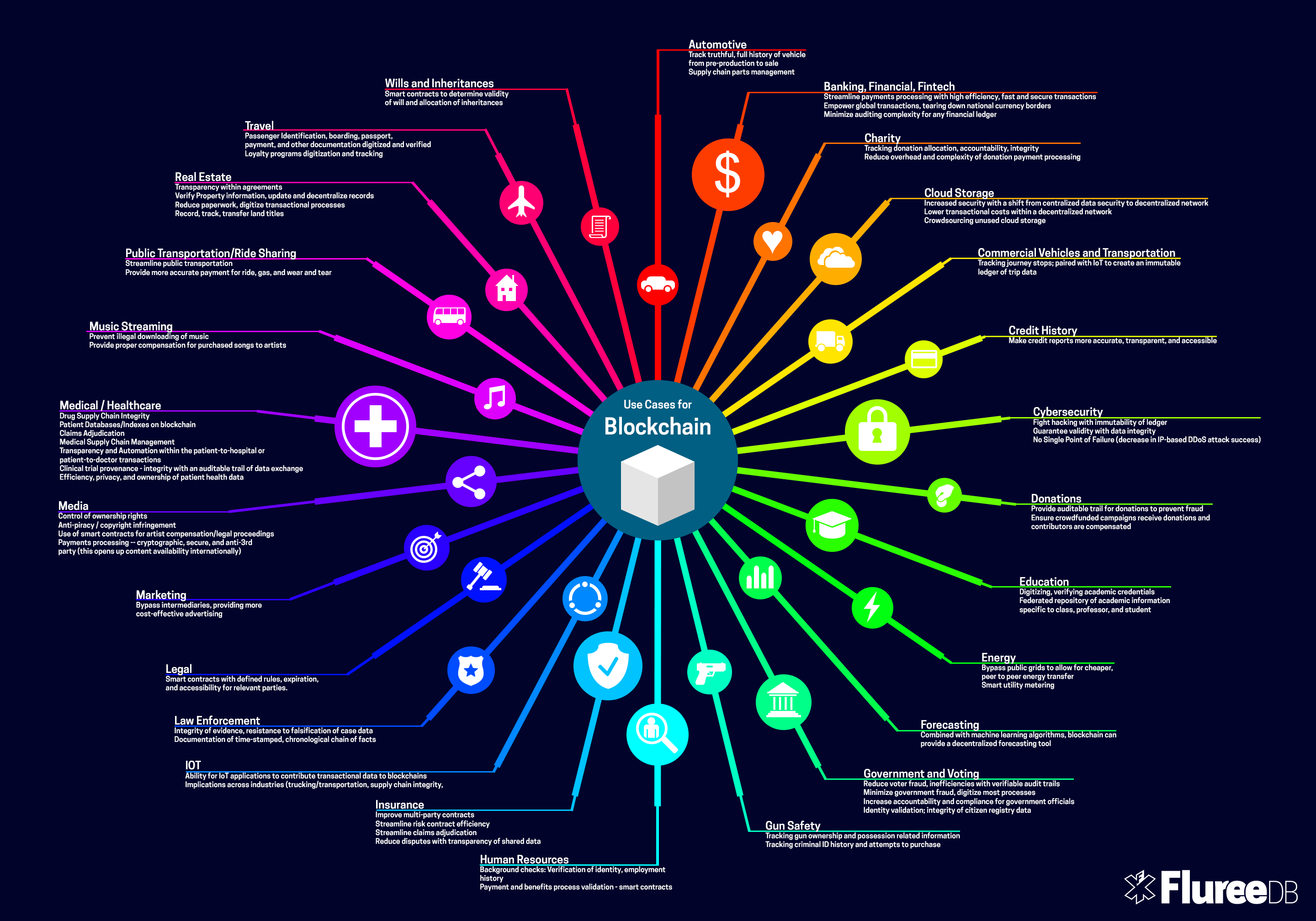
For contrast, here is a graphic I saw on Reddit  (click here for high resolution image) that provided many plausible examples of use cases where blockchain does or could create value.


====

Any sufficiently advanced technology is indistinguishable from magic.
Arthur C. Clarke


In a recent article, Eleni Vasilaki, Professor of Computational Neuroscience at the University of Sheffield, reminded readers that humans tend to be afraid of what they don’t understand. According to Vasilaki, some technological achievements surpass expectations and human performance are to the point that they look unrealistic and surrounded by a ghastly mystery halo.

A common mistake is in considering AI applications singularly and fearing humans to be replaced. Singularity is near, but nearness is relative. Vasilaki points out that AI is task-oriented, while humans are versatile by nature. Human versatility comes from an understanding of the world, and this, in turn, is developed over years. No AI seems likely to achieve this understanding anytime soon. People seem to overlook how much the huge amount of data and computational power available today might be the reason for the success of today’s AI.


Technology panacea

First Man has brought back memories of the debates around the utility of the space program prior to the launch of the Apollo 11 mission to the Moon in 1969. In a paper prepared for IAF’s meeting in Stuttgart in 1952, Wernher von Braun wrote: “When we are asked the purpose of our striving to fly to the moon and to the planets, we might as well answer with Maxwell’s immortal counter question when he was asked the purpose of his research on electrical induction: «What is the purpose of a newborn baby?»” Today, few seem to pay attention to the fact that the impressive technological development of recent years owes almost everything to the space program.

A by-product of the mission to the Moon was the belief that any technological achievement is possible and at hand, and this might be one of the reasons for the cyclical proposition of new technological hypes. As Isabella Massardo reminds, in the last decade, speech-to-speech technology has been a constant hype, while machine translation has reached the plateau of productivity. Blockchain, together with cryptocurrencies or on its own, also has been a hype for a few years now. In 2017, blockchain was already on the verge of disillusionment. In 2018, blockchain (now for data security) is still a hype. Not surprisingly, among the emerging and rapidly accelerating technologies that are listed to be actively monitored as disrupting innovations for being expected to profoundly impact the way of dealing with the workforce, customers and partners, none is directly related to translation.

Indeed, democratized AI might make digital twins closer than blockchain, as hundreds of millions of things are estimated to have digital twins within five years. Actually, according to Gartner, blockchain “has the potential to increase resilience, reliability, transparency, and trust in centralized systems.” The keyword here is “centralized systems,” while it is now pretty clear that the magic word to sell blockchain is “decentralization”.

Unfortunately, the decentralization of business models and processes is definitely not straightforward for most businesses. As a matter of fact, many are still trying to understand what blockchain is and how it works and, more importantly, how it can be utilized for mission-critical applications. Not surprisingly, Gartner anticipates that through 2018, 85% of projects with “blockchain” in their titles will deliver business value without actually using a blockchain. Also according to Gartner, “blockchain might one day redefine economies and industries via the programmable economy and use of smart contracts, but for now, the technology is immature.”

A matter of transparency


Even technology enthusiasts should better be cautious about the prospected use of blockchain in translation. Maybe, translation blockchain enthusiasts might answer a few questions and help clarify:
  1. How is blockchain supposed to solve the perennial problem of interoperability?
  2. How is blockchain supposed to help have more professional translators to match demand?
  3. How is blockchain supposed to open up existing language platforms?
  4. How is blockchain supposed to guarantee security, confidentiality, and privacy?
  5. How is blockchain supposed to cut translation prices further?
  6. How is blockchain supposed to make translation quality quantifiable?
  7. Is the network for translation blockchain open?
  8. How is mining implemented, through PoW or PoS?
  9. Mining for cryptocurrencies requires huge investments; this is why it is rewarded with cryptocurrencies, which are negotiable. Are “tokens” negotiable too?
  10. Given the investment in tokens required, how can users be guaranteed against a lack of transparency and a possible crash?
Contrary to what has been happening in situations where the introduction and implementation of blockchain is advocated, or has been taking place, no one in the translation industry has been asking any of these questions, at least publicly or out loud, and obviously, no answer has been given or anticipated so far.

Interoperability

Presenting interoperability as a dilemma still in 2018 means that the translation industry is far away from maturity. Since inception, the translation industry has been proclaimed to be on the edge of a massive change in how they receive and translate content. Changes have actually happened over the years, coming almost exclusively from outsiders. Major translation buyers have been imposing their own solutions to their own problems with their suppliers who, in cascade, have imposed these solutions to their own vendors. The fragmentation of the industry has effectively prevented the birth of any real industry standards, further encouraging this intrusiveness. Translation industry players have always been so obsessed with the risk of compromising their own little garden and thus rejecting, if not hindering, where possible, any real standardization effort. Major players have been trying, in turn, to take advantage of any standardization initiatives, even those that they themselves advocate, to enforce their own models and maintain what they see, often wrongly, as a competitive advantage.

This attitude is in blatant contrast with any new methodologies, but it has the reassuring effect of keeping players in a sort of comfort zone, allowing them to prevent any “resource dispersion” and contain any losses due to the inefficiencies ensuing from their immobility. This is also why the processes of most LSPs are optimized for small projects, and why organic growth and a critical mass are so hard to achieve. Unfortunately, process efficiency comes from design and technical interoperability is effective only when technology matches processes, not vice versa.

A leap of faith

Everyone working in the translation industry knows the problems permeating it. Listing them is barely a starting point towards a solution whatsoever.

How is “tracing a user’s history” supposed to be “increasing trust for the translator’s ability and capability?” How is the tracking of digital assets supposed to benefit their creators when blockchain in no way can guarantee ownership? A ledger is used to record transactions not to certify the ownership of the assets in each transaction.

Therefore, Kirti Vashee’s doubts here are well expressed: “Everybody involved in blockchain seems to be trying to raise money. The dot-com boom and bust also had, to some extent similar characteristics, with promises of transformation and very little proof that anything that was clearly better than existing solutions. I feel the problem description of the LIC initiative is clear in this overview, but I am still unclear on what exactly is the solution. I would like to see examples of a few or many transactions executed through this blockchain to see how it is different and better before, I cast any final judgment.”
 

A relationship-based industry

The translation industry is an intricate intertwinement of relationships between the businesses, players, publishers, analysts, and consultants governing its economy. In this context, the difference is made by who you know. For this reason, ignoring who Renato Beninatto is tantamount to a lèse-majesté offense and it is not exactly clever for someone in a prominent position to ignore him or, even worse, pretend to ignore him, as Lionbridge’s CEO, John Fennelly reportedly did at LocWorld 38 in Seattle, even though or especially if he comes from another industry and a different experience.
The intertwinement of relationships that characterizes the industry has resulted in exclusive clubs that have their meetings at industry events. Each area of the industry has its own club, and each club has its governance. Occasionally, members of different clubs from different areas mingle, but generally, clubs remain distinct. Some clubs are more numerous or powerful than others and their governance may be assimilated to a mafia, as a young and overly ambitious would-be analyst and consultant named it. He also did whatever it took to join it, and he made it.

As long as you are a member of one of these clubs and share its spirit and its policy, you can be sure that any initiative you take will not be hindered, far from it. No one will ever challenge you or even ask you any embarrassing questions.

Openness and negotiability

For this very reason, though, the questions on the openness of the blockchain network and the negotiability of tokens are fundamental. Blockchain may have the potential to increase resilience, reliability, transparency, and trust in centralized systems, but the most powerful promise of blockchain is about decentralization. Being extremely clear on the openness of the blockchain network and on the associated protocols is paramount.

Clarifying the negotiability of “tokens” is equally crucial. Indeed, more and more often, “investment” is the other word accompanying cryptocurrencies, even though, in principle, they are not supposed to generate returns; after all, it’s just software. But they are used also to purchase goods having a counter value in fiat money and are then negotiable. Bitcoin, for examples, can be converted into cash, using a Bitcoin ATM or a Bitcoin debit card or via an online service. Joining a token-based translation blockchain network would require an initial investment in tokens, whether on a barter exchange for data or in fiat money. If tokens are distributed by a centralized entity, this entity would most probably be asking people to purchase tokens. Even though any new users that would join the network won’t fund older users, the founders will end up being the richest ones guaranteed, as in a typical Ponzi scheme: The more people join, the more the founders will earn. And this is the only way they can make money. From nothing, as the only asset of founders is the network. Their net worth would be in fiat currency while the members of the network would not be able to cash their tokens after having bestowed their data assets to the network, and if the network crashes they might be dumped with nothing.

Finally, with merger or acquisition accounting for growth at 3 of the top 5 fastest growing LSPs for 2018 it is hard to believe that these will join the blockchain network anytime soon. And, by the way, there has always been only one man in black.

Beyond baloney

The comparison with the automotive industry and the car is definitely out of scale, but it is true that translators too use only a fraction of the many features available in any translation software tool. Also, the automobile is now a general purpose technology and the only possible comparison might be with the smartphone.

Yet, although “augmented translation” is just diverting marketing crap, if democratized AI will make any sense, it will help redefine the value of linguists rather than taking jobs away from them.
Arthur Clarke’s famous quote above explains why technology is outpacing our ability to comprehend what we can do with it. The next new thing in the translation industry will very soon be conversational agents and virtual assistants rather than blockchain.


Virtual assistants, aka chatbots or bots, already are or are going to be the bridge between technical documentation teams and customer support and power most customer service interactions. Indeed, technical support is the most common type of chatbot content, and bots are said to be the new FAQ.
Technically speaking, there are two kinds of virtual agents:
  • One kind is scripted. It can respond only to questions that it was programmed to understand.
  • Another uses AI, so it can understand what the customer is telling it, and its knowledge grows the more it interacts with people.
The issue, today, is how to prepare, organize and structure content so that chatbots can use it.
Translation industry players, from each side of the fence, have learned to reuse content, while CMS systems are still underused, especially for single-sourcing. The next challenge for content producers is to extrapolate answers to customer questions from a unified set of content modules delivered across channels, rather than creating new batches of (largely duplicated) content or recreating content by copying and pasting existing content from their CMS into a form that chatbots can use.

More technical authors will be needed accustomed to single sourcing through CMS. Will they be translators accustomed to leveraging past translations using TMs?

In fact, Microsoft has already issued a new chapter of its style guide devoted to writing for chatbots.

The main components of chatbots are four:
  1. Entities
    The “things” users are talking about with a chatbot; they can be inherited from taxonomy nodes in a CMS.
  2. Intents
    The goal of a user’s interaction with a chatbot; it can be mapped as content elements in a CMS and be defined as primary and alternate questions.
  3. Utterances
    The (unique) questions or commands a user asks a chatbot.
  4. Responses
    The answers the chatbot returns to utterances; they can be defined in a CMS.
The coming future authoring skill consists in breaking existing content into smaller, modular chunks within CMSs, to achieve COPE (Create Once Publish Everywhere), the new holy grail.

And if dealing with Conversational UI, the new challenge will be writing dialogues. This will require the skills of a UX writer and a creative writer. Ready Player One?

=======================


Luigi Muzii's profile photo


Luigi Muzii has been in the "translation business"  or "the industry" since 1982 and has been a business consultant since 2002, in the translation and localization industry through his firm. He focuses on helping customers choose and implement best-suited technologies and redesign their business processes for the greatest effectiveness of translation and localization-related work.

This link provides access to his other blog posts.

Monday, October 22, 2018

How Blockchain will Revolutionize the Language Services Industry: The LIC Solution

This is a guest post by  Dr. Peggy Peng, CEO, and  Founder of the LIC Foundation describing her vision for blockchain in the translation industry and providing an initial overview on the blockchain initiative that she is leading. I saw her present the overall vision of  LIC in some detail at the TAUS conference, and I thought it would be interesting to hear from a proponent of the technology who believed enough in the technology to fund it herself.

From those who are enthusiastic about blockchain, I hear the refrain that it is a way to build a trusted network and reduce the control of oligarchies which rule almost every high-transaction-volume industry in the world today. Thus we could eliminate very low-value middlemen in a system e.g. the need for lawyers and title insurance agencies in a real estate transaction for example. However, this means that no central authority exists or develops in this new world, and the system is truly independent of controlling forces. However, I repeatedly see systems that try to utilize a blockchain but retain some form of centralized control and are thus ruining the most attractive feature of the technology by doing so.

This is a still a technology that has players who use lots of smoke and mirrors from much of what I have seen outside of the translation industry, and so we should tread with care. Everybody involved in blockchain seems to be trying to raise money. The dot-com boom and bust also had, to some extent similar characteristics, with promises of transformation and very little proof that anything that was clearly better than existing solutions. I feel the problem description of the LIC initiative is clear in this overview but I am still unclear on what exactly is the solution. I would like to see examples of a few or many transactions executed through this blockchain to see how it is different and better before, I cast any final judgment. While most failed in the dot-com boom-bust cycle there were some great successes and so I expect this will be similar, the initial signal to noise is very low but for those who look carefully there is value. But I am already at a point where I feel that it will include more substance than a description of an ICO and a distributed ledger. I think it should present clearly discernible value to interested parties. I think the key will be a true collaboration network which is mutually beneficial to all the key stakeholders in some mostly incorruptible structure that will be mostly immune to future domination by monopolistic forces. These may or may not involve tokens or ICOs, and quite likely will have some kind of distributed ledger, I expect.

But honestly, I am still looking for a real example that makes sense at the common sense level and does not require faith in a crypto future and is not filled techno-jargon that obfuscates and distracts from fundamental questions. I have seen that many who talk about "using AI" today have a very vague and nebulous definition of what this means. This lack of definition of the specific use case is a very clear clue of cluelessness. The most successful applications of machine learning (AI) are around very clearly defined problems and data. This is necessary for successful outcomes.  I expect that the first examples of blockchain will come from use cases that remove marginal intermediaries like in the real estate scenario I described above.  The most successful examples of blockchain reported today are focused on very narrow and specific challenges where the benefits can be clearly explained to those concerned without requiring you to go to the Blockchain School for Morons.

As I mentioned in my last post, which was a skeptical view of the role blockchain may have in the industry, I am hoping to post more varied opinions on this subject. There are already some interesting comments on the first post which support the skepticism of the overall post. I hope that other proponents of blockchain will also join the dialogue.

And, I wish to make it clear that if the LIC Foundation solves the problems we have tolerated for decades in a way that is clear to all who engage in the system, I wish them the greatest success. But it will probably not be necessary as it will be adopted because it makes sense.


==================

2017 has been the Year of the Blockchain but the language service industry has largely been spared the onslaught of blockchain startups claiming to shake up the industry. Even the advances in AI and machine learning has so far not been able to replace the need for translators. 

A lot of criticism of blockchain centers around the crypto-currency variants whose value seems suspect and speculative in a somewhat non-rational way.  

However, having spent five years with the top management of Transn, China’s largest translation company with 30,000 translators, I understand that blockchain presents a historic opportunity to solve some of this industry’s long-standing problems.  

The Problems in the Language Service Industry


Here are some of the problems that have long permeated the industry; customers cannot get language services anytime, anywhere, from any device. They also have no way of determining the quality of the translated material.

Meanwhile, translators lack the network to access jobs themselves and are therefore dependent on translation companies to provide jobs. Translators also do not have a means of ranking their capabilities so that they can be screened for jobs that match their level of competency. In many cases, they are grouped together with low-level translators to do the same low-level work and are paid the same remuneration as lesser skilled translators. 
This fragmented nature of the industry creates a bigger problem for the players. The lack of shared knowledge between competing translation companies means there is a dearth of data to be mined. As a result, the big data of the industry cannot be mined. 

This is where blockchain offers a solution.


What is Blockchain?


A blockchain is a decentralized, incorruptible digital ledger that records any type of transactions and allows information to be distributed without being duplicated.

Imagine if your team is working on the same Google Docs sheet and everyone is updating the sheet at different times from different places. All the changes are tracked and updated without needing to create duplicate versions of the sheet.

Blockchain works in the same way. Data is not stored in one single location which means data is not centralized. Instead, data is hosted on millions of computers simultaneously so that there is no one party in control of all the information and all parties can make changes to the asset without creating duplicate versions of it.

Our current centralized model means users congregate digitally on centralized platforms (such as Airbnb, eBay, and Facebook) to use a service and conduct transactions. We have to create a username and password to log in to a digital service provider, store all our information there and hope nobody finds out our password. This system is highly vulnerable to attackers. If your account is hacked, all your information is exposed. The blockchain may store data across its network, but the data is encrypted. Blockchain technology offers an almost hack-proof way to store information.


Also, in our current centralized model, all our data is owned by the service providers that store our data. We have seen many cases of abuse where service providers use our data to sell tailored solutions to advertisers and prying governments. Even if they do not sell our data, they may unintentionally expose our data to nefarious parties. In the decentralized model where data is stored across our network of computers, we own our own data.


With the Internet currently, any digital asset can be copied and illegally distributed, which created many IP problems for content creators. Blockchain technology is the backbone for a new kind of Internet, where digital information can be distributed but not copied.


How Blockchain Solves the Language Service Industry Problems


The nature of blockchain’s encrypted, decentralized model means that data stored are permanent and cannot be tampered. The blockchain records every single transaction that the user makes. This creates a more credible way of tracing a user’s history, therefore increasing trust for the translator’s ability and capability. 

The permanency and the incorruptibility of the blockchain also offer another benefit. Any asset created and modified on the blockchain can be traced back to the parties who added a modification to the asset. This is useful in tracking and identifying the original and co-creators of the digital assets. This is also groundbreaking for translators as they will be able to record their digital assets and then be fairly compensated for future use of their assets.


How Does Blockchain Serve Its Community


LIC Foundation’s blockchain only serves as the underlying infrastructure to power all kinds of activities. It is similar to a power grid. Energy is processed through the power distribution network to supply electricity to appliances for the end user. Similarly, LIC Foundation’s blockchain will be the infrastructure where AI and human translators power the blockchain network to supply solutions to the end user.

 Another way of looking at it is if you view the Internet as the current infrastructure on which all websites and apps are built on, then blockchain is the future infrastructure. The blockchain is widely expected to be the standard infrastructure in the coming years, powering most digital businesses.
 In 1994 when the World Wide Web Consortium was formed and Netscape was the go-to web browser, only several thousand websites existed worldwide. We are at that point with blockchain, where several thousand blockchain startups have been founded in the past year.

And just as the Internet paved the way for developers to create all kinds of web apps and mobile apps, so too on the LIC blockchain, developers will be able to create new DAPPs (decentralized applications) to serve the needs of the language service industry. Apps can be anything from translation marketplaces to crowdsourced movie subtitling. This massive crowdsourcing will allow people to read websites in their language, watch videos dubbed in their language and have audio translated in real time.

The LIC Ecosystem

Some of these kinds of service are already available on the Internet but none allows the contributors to be recognized and rewarded for their effort and because they are mostly centralized, no one web service has seen wide-scale adoption.

Because blockchain can reach the globe, over time, I expect LIC’s public chain to be one of the biggest digital ecosystems for the language services industry that will power the information exchange globally.

About Dr. Peggy Peng : 


Dr. Peggy Peng holds a Ph.D. in Education from Huazhong University of Science & Technology. She was a C-level executive at Transn, China’s biggest translation company, for five years. Prior to that, she was the Academic Director of the Singapore Chinese Chamber of Commerce & Industry and the Deputy Director of Nanyang Technology University. She is a Council Member of the Singapore Blockchain Technology Foundation.


About LIC Foundation : 

LIC Foundation is a non-profit organisation formed to create the world’s first public blockchain for the language service industry. LIC Foundation’s blockchain development is led by AI expert, Dr. Li Qinghua, who holds a Masters in Artificial Intelligence from the National Taiwan University and a Ph.D. in Artificial Intelligence from Tsinghua University. Dr. Li developed the world’s first palmtop share trading system in 1999 and the first online gaming platform and messenger software that can support more than 10,000 users in China. LIC Foundation was incepted in mid-2018 in Singapore and plans to launch its blockchain mid-2019.

LIC Foundation’s advisory board : 

Zhiyong Sun: Executive Director of Blockchain & Digital Currency Laboratory and Adjunct Professor at the centre for Law & Economics at China University of Political Science & Law
Hingbing Zhu: Chairman of Singapore Blockchain Technology Foundation
ChenDan Feng: President of Singapore Translation Association
Henry He: Founder and CEO of Transn and Vice President of Translator’s Assc of China
Christopher Djaouani: Executive Director at Donnelley Language Solutions, now part of the world’s third largest translation service provider: SDL Plc.