Pages

Tuesday, December 25, 2018

The Global eCommerce Opportunity Enabled by MT

The holiday season around the world today is often characterized by special holiday shopping events like Black Friday and Cyber Monday. These special promotional events generate peak shopping activity and are now increasingly becoming global events. They are also increasingly becoming a digital and online commerce phenomenon. This is especially true in the B2C markets but is also now often true in the B2B markets.

The numbers are in, and the most recent data is quite telling. The biggest U.S. retail shopping holiday of the year – from Thanksgiving Day to Black Friday to Cyber Monday, plus Small Business Saturday and Super Sunday – generated $24.2 billion in online revenues. And that figure is far below Alibaba’s 11.11 Global Shopping Festival, which in 2018 reached $30.8 billion – in just 24 hours.


When we look at the penetration of eCommerce in the U.S. retail market, we see that, as disruptive as it has been, it is still only around 10% of the total American retail market. According to Andreessen Horowitz, this digital transformation has just begun, and it will continue to gather momentum and spread to other sectors over the coming years.

The Buyer’s Experience Affects eCommerce Success


Success in online business is increasingly driven by careful and continued attention to providing a good overall customer experience throughout the buyer journey. Customers want relevant information to guide their purchase decisions and allow them to be as independent as possible after they buy a product. This means sellers now need to provide much more content than they traditionally have.

Much of the customer journey today involves a buyer interacting independently with content related to the product of interest, and digital leaders understand that understanding the customer and providing content that really matters to them is a pre-requisite for digital transformation success.

B2B Buying Today is Omnichannel


In a recent study focused on B2B digital buying behavior that was presented at a recent Gartner conference, Brent Adamson pointed out that “Customers spend much more time doing research online – 27% of the overall purchase evaluation and research [time]. Independent online learning represents the single largest category of time-spend across the entire purchase journey.”

The proportion of time 750 surveyed customers making a large B2B purchase spent working directly with salespeople – both in person and online – was just 17% of their total purchase research and evaluation process time. This fractional time is further diluted when you spread this total sales person contact time across three or more vendors that are typically involved in a B2B purchase evaluation.

The research made evident that a huge portion of a sellers’ contact with customers happens through digital content, rather than in-person. This means that any B2B supplier without a coherent digital marketing strategy specifically designed to help buyers through the buyer journey will fall rapidly behind those who do.

The study also found that just because in-person contact begins, it doesn’t mean that online contact ends. Even after engaging suppliers’ sales reps in direct in-person conversations, customers simultaneously continue their digital buying journey, making use of both human and digital buying channels simultaneously.

Relevant Local Content Drives Online Engagement


Today it is very clear to digitally-savvy executives that providing content relevant to the buyer journey really matters and is a key factor in enabling digital online success. A separate research study by Forrester uncovered the following key findings:
  • Product information is more important to the customer experience than any other type of information, including sales and marketing content.
  • 82% of companies agree that content plays a critical role in achieving top-level business objectives.
  • Companies lack the global tools and processes critical to delivering a continuous customer journey but are increasingly beginning to realize the importance of this.
  • Many companies today struggle to handle the growing scale and pace of content demands.
A digital online platform does enable an enterprise to establish a global presence very quickly. However, research suggests that local-language content is critically needed to drive successful international business outcomes. The global customer requires all the same content that a US customer would in their own buying journey.

Machine Translation Facilitates Multilingual Content Creation


This requirement for providing so much multilingual content presents a significant translation challenge for any enterprise that seeks to build momentum in new international markets. To address this challenge, eCommerce giants like eBay, Amazon, and Alibaba are among the largest users of machine translation in the world today. There is simply too much content needs to be multilingual to do this with traditional localization methods.

However, even with MT, the translation challenge is significant and requires deep expertise and competence to address. The skills needed to do this in an efficient and cost-effective manner are not easily acquired, and many B2B sellers are beginning to realize that they do not have these skill in-house and could not effectively develop them in a timely manner.

Expansion Opportunities in Foreign Markets


The projected future growth of eCommerce activity across the world suggests that the opportunity in non-English speaking markets is substantial, and any enterprise with aspirations to lead – or even participate – in the global market will need to make huge volumes of relevant content available to support their customers in these markets.

When we look at eCommerce penetration across the globe, we see that the U.S. is in the middle of the pack in terms of broad implementation. The leaders are the APAC countries, with China and South Korea having particularly strong momentum as shown below. You can see more details about the global eCommerce landscape in the SDL MT in eCommerce eBook.


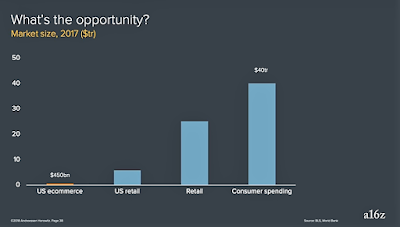
The chart below, also from Andreessen Horowitz shows the shift in global spending power and suggests the need for an increasing focus on APAC and other regions outside of the US and Europe. The recent evidence of the power of eCommerce in China shows that these trends are already real today and are gathering momentum.

The Shifting Global Market Opportunity


To participate successfully in this new global opportunity, digital leaders must expand their online digital footprint and offer substantial amounts of relevant content in the target market language in order to provide an optimal local B2C and B2B buyer journey. 

As Andreesen points out, the digital disruption caused by eCommerce has only just begun and the data suggests that the market opportunity is substantially greater for those who have a global perspective. SDL's MT in eCommerce eBook provides further details on how a digitally-savvy enterprise can handle the new global eCommerce content requirements in order to partake in the $40 trillion global eCommerce opportunity.

This is a slightly updated post that has been already published on the SDL site


Happy Holidays to all.  

May your holiday season be blessed and peaceful.  


Click here to find the SDL eBook on MT and eCommerce.


Thursday, November 15, 2018

The Growing Momentum of Machine Translation in Life Sciences

=====


This first post in an ongoing series takes a closer look at the emerging use and acceptance of machine translation (MT) in the Life Sciences industry. We take a look at the expanding role MT is likely to have in the industry over the coming years and explore some key use cases and applications.

The Life Sciences industry, like every other industry today, feels the impact of the explosion of content and of the driving forces that compel the industry to use MT and machine learning (ML). The growth is caused by:
  • The volume of multilingual research impacting drug development
  • The increasing volume of multilingual external consumer data now available (or needed), which influence drug discovery, disease identification, global clinical research, and global disease outbreak monitoring
Consumers share information in many ways, across a variety of digital platforms. It has become increasingly necessary to monitor these platforms to stay abreast of trends, impressions, and problems related to their products.

It is useful to consider some of the salient points behind this growing momentum.

MT use has exploded


The content that needs translation today is varied, continuous, real-time and always flowing in ever greater volumes. We can only expect this will continue and increase.

The use of global public MT portals is in the region of an estimated 800 billion words a day. This is astounding to some in the localization industry who account for less than 1% of this, and it suggests that MT is now a regular part of digital life.

Everyone, both consumers and employees in global enterprises, use it all the time. This use of public MT portals also involves many global enterprise workers, who may compromise data security and productivity by using these portals. However, the need for instant, always-available, translation services is so urgent that some employees will take the risk.


Some large global enterprises recognize both the data security risks entailed by this uncontrolled use and the widespread need for controlled and integrated MT in their digital infrastructure. In response, they have deployed internal solutions to meet this need in a more controlled manner.

Why Life Sciences has not used MT historically


There are several reasons why Life Sciences has not used MT, including quality requirements, lags in technical adoptions, global need and non-optimized MT capabilities.

The Life Sciences industry needs high quality, accurate translations given that often the life and death of human beings could be at stake if a translation is inaccurate, creating a subject-matter-expert-dependent and verified quality mindset. The industry saw little benefit from using MT since it was so hard to control and optimize. Depending on the kind of errors, there can be catastrophic consequences from failures and thus a general “not good enough for us” attitude within the industry. Occasional breaking news about MT mishaps did not help.

The Life Sciences industry is not typically early adopters of new technologies. Historically Life Sciences organizations have focused on technology and innovation in targeted areas but that is changing as the need to innovate in multiple areas is only increasing to stay competitive. It is no longer a nice to have, it’s a must-have. At the same time, technologies like machine translation have evolved and improved significantly over the last few years which has impacted how MT is viewed. Machine Translation is now seen as a viable and effective solution to address certain global content challenges.

There’s a concern about risk management/mitigation. Life Sciences organizations have been concerned about the risk involved in leveraging machine translation due to the data security aspects as well as the ability to handle their industry-specific terminology requirements. Generic MT solutions like Google do not provide adequate data security and tailoring controls for the specific needs of an enterprise. Once something is translated using Google Translate it is potentially available in the public domain. Data privacy and security is a top priority for Life Sciences companies and the need for an Enterprise MT solution that provides the benefits of MT technology but with the necessary security, elements are essential. Additionally, there were many use cases where the enterprise needed to have the MT capabilities deployed in private IT environments, and carefully integrated with key business applications and workflow.

But compelling events are forcing change..


The massive increase in the volume of content in general and high volumes of multilingual content from worldwide digitally connected and active patients and consumers are key drivers for the enterprise adoption of MT across the industry.

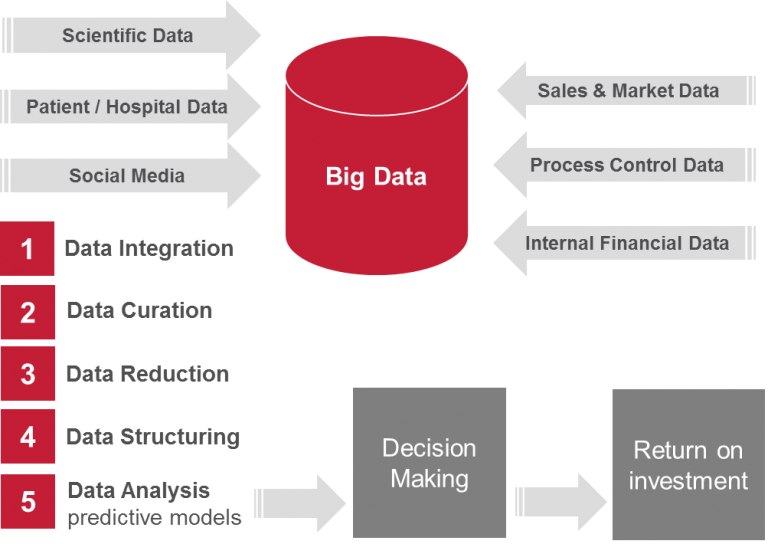
In the Life Sciences industry, an exponential increase in internal scientific data (particularly in genomics and proteomics data) has triggered global research. This research has led to new ways to develop drugs, knowledge about disease pathways and manifestation, and to the development of tailored treatments for individual patients. Keeping abreast of potentially breakthrough research, much of which may be in local languages has become a competitive imperative.

Source: Arcondis
 The huge increase in patient-related data such as the data from central laboratories, prescriptions, claims, EHRs and Health Information Exchanges (HIEs) provides an immense opportunity to analyze and gain insights across the entire value chain, such as:
  • Drug Discovery: Analyzing and spotting additional indications for a drug, disease pathways, and biomarkers
  • Clinical Trials: Optimizing clinical trials through better selection of investigators and sites, and defining better inclusion and exclusion criteria
  • Wearables: Wearable technologies generate a significant amount of data to monitor patients, such as tracking key parameters and therapy compliance
  • Aggregated data: The ability to aggregate data from multiple reporting sources has also increased the volume and flow of such data.

The Impact of Social Media


Signals related to problems and adverse effects may appear in any language, anywhere in the world. The need to monitor and understand this varied data grows in importance as information today can spread globally in hours. Safety concerns can have serious implications for patient health and on a company’s financial health and reputation. These concerns need to be monitored to avoid derailing a drug that may be on track to become an international success.

Additionally, another important use for machine translation is in the social media and post-marketing area. Life Sciences organizations can compile large amounts of data from multiple languages leveraging MT technology. Monitoring sentiment across all language groups allows Life Sciences organizations to track market-specific issues, sentiment and explain trends. It also helps develop marketing and communication strategies to handle dissatisfaction and avoid crises or to build further momentum to ride positive sentiment.

Applying MT to Epidemic Outbreak Predictions


ML and AI technologies are also applied to monitor and predict epidemic outbreaks around the world, based on satellite data, historical information on the web, real-time social media updates, and other sources. For example, malaria outbreaks predictions take into account temperature, average monthly rainfall, the total number of positive cases, and other data points.

Increasingly the aggregated data that makes this possible is multilingual and voluminous and requires MT to enable more rapid responses. Indeed, such monitoring would be impossible without machine translation.

MT Quality Advancements and Neural MT


MT quality has improved dramatically in recent years, driven by the recent wave of research advances in machine learning, increasing volumes of relevant data to train these systems, and improvements in computing power needed to do this.

This combination of resources and events are key drivers for the progress that we see today. The increasing success of deep learning and neural nets, in particular, have created great excitement as successful use cases emerge in many industries, and also benefit a whole class of Natural Language Processing (NLP) applications including MT.

SDL is a pioneer in data-driven machine translation and pioneered the commercial deployment of Statistical Machine Translation (SMT) in the early 2000’s. The research team at SDL has published hundreds of peer-reviewed research papers and has over 45 MT related patents to their credit. While SMT was an improvement over previous rules-based MT systems, the early promise plateaued, and improvements in SMT were slow and small after the initial breakthroughs.

Neural MT changed this and provided a sudden and substantial boost to MT capabilities. Most in the industry consider NMT a revolution in machine learning rather than evolutionary progress in MT. The significant improvements only represent the first wave of improvement, as NMT is still in its nascence.


At SDL our first generation NMT systems improved 27% on average over previous SMT systems. In some languages, the improvement was as much as 100%, based on the automatic metrics used to measure improvement. The second generation of our NMT systems shows an additional 25% improvement over the first generation. This is remarkable in a scientific endeavor that typically sees 5% a year in improvement at most. It is reasonable to expect continued improvements as the research intensity in the NMT field continues and as we at SDL continue to refine and hone our NMT strategy.


The degree of fluency and naturalness of the output, and its ability to produce a large number of sentences that are very fluent and look like they are from the human tongue drives much of the enthusiasm for Neural MT. Human evaluators often consider the early results, with Neural MT output, to be clearly better, even though established MT evaluation metrics such as the BLEU score may only show nominal or no improvements.

The Neural MT revolution has revived the MT industry again with a big leap forward in output quality and has astonished naysayers with the output fluency and quality improvements in “tough” languages like Japanese, German and Russian.

A Breakthrough in Russian MT


An example of SDL’s MT competence was demonstrated recently, when the SDL research team announced a breakthrough with Russian MT, where its new Neural MT system outperformed all industry standards, setting a benchmark for Russian to English machine translation, with 95% of the system’s output labeled as equivalent to human translation quality by professional Russian-English translators.

Additionally, SDLs broad experience in language translation services and enterprise globalization best practices has also enabled them to provide effective MT solutions for many enterprise use cases ranging from eDiscovery, localization productivity improvements, global customer service and support to broad global communication and collaboration use cases that make global enterprises more agile and responsive to improving CX across the globe.

Availability of Enterprise MT Solutions


While the use of MT across public portals is huge, there are several reasons why these generic public systems are not suitable for the enterprise. These include a lack of control on critical terminology, lack of data security, lack of integration with enterprise IT infrastructure and lack of deployment flexibility. MT needs to have the following core capabilities to make sense to an enterprise:
  • The ability to be tuned and optimized for enterprise content and subject domain.
  • The ability to provide assured data security and privacy.
  • The integration into enterprise infrastructure that creates, ingests, processes, reviews, analyzes, and generates multilingual data.
  • The ability to deploy MT in a variety of required settings including on-premises, private cloud or a shared tenant cloud.
  • The availability of expert services to facilitate tailoring requirements and use case optimization.

Life Sciences Perspective


What is clear today, is that the Life Sciences industry can gain business advantage and leverage from the expeditious and informed use of MT. It is worth reviewing this technology to understand this impact.

MT can transform unstructured data, such as free-text clinical notes or transcribed voice-of-the-customer calls, into structured data to provide insights that can improve the health and well-being of patient populations.

As self-service penetrates the Life Sciences industry, the growing volume of new data from around the world can:
  • Drive better health outcomes and advance the discovery and commercialization of new drugs
  • Improve large-scale population screening to identify trends and at-risk patients.
MT and text mining together will enable the enterprise to process multilingual Real World Evidence (RWE) and generate Real World Data (RWD) to inform all phases of pharmaceutical drug development, commercialization, and drug use in healthcare settings.

Regulatory bodies like the FDA could also utilize additional data related to drug approval trials by expanding to more holistic data during the product approval process – for example, they can also review multilingual internal data from international reports, and multilingual external data from social media that MT can make available for analysis. This could enable much faster processing of drug approvals as more data would be available to support and provide needed background on new drug approval requests.

As the Royal Society states:
“The benefits of machine learning [and MT] in the pharmaceutical sector are potentially significant, from day-to-day operational efficiencies to significant improvements in human health and welfare arising from improving drug discovery or personalising medicine.”

This is a post that was originally published on the SDL website in two parts which are combined here in a single long post. This post also reflects the expertise of my colleague Matthias Heyn, VP of Life Sciences Solutions at SDL. 

Sunday, October 28, 2018

What's Cooking? Fundamental Questions about Blockchain in the Translation Industry

This is a guest post by Luigi on his further thoughts on blockchain in the localization industry. He asks some fundamental questions that should provide readers a good reality check on blockchain stuff you might see at a conference or read in an industry journal. He also points to almost new technology that might really matter for this industry NOW, i.e. interactive virtual assistants (IVAs). The momentum on this is building as we speak, and for the most part, the industry is being swept aside from any relevance with it, as so few are even barely aware of it. This is a new and better way to serve digital customers, a way to improve the overall digital experience, a way to more efficiently serve the right content to the right customer at the right time. This is where CX meets DX and where competitive advantage can be built for digital transformation strategies. But everywhere I turn, I see naysayers. Localization people tend to look for volume and efficiency, and very few look for value.

Neural MT has reached a point where possibly even gorillas could build some kind of  (probably crappy) NMT system. There are 10 or more open source toolkits to choose from. To do NMT (or SMT) well, and deploy systems on successful industrial scale has ALWAYS been difficult, requiring deep competence and deep knowledge of the technology and the data. Yes, the data that you learn from. It really really really does matter. The value here will come from those who have built thousands of systems and have something called insight, which is only acquired after this base exploration work is done. Just like playing a musical instrument even half-way well, it takes time and practice.

To add value to IVAs also means you have to understand content, value, and relevance to the customer at least at some superficial level. I am learning a lot more about content at SDL, and it is very exciting to be at a point in the DX chain where you can influence and shape the overall experience in a way that truly adds value. In an industry that is so focused on translating content that for the most part, only a few customers value, it is exciting to be at the point further up the river where decisions are being made about what customers really need, why, and how it should be provided. Content creation and content architecture in relation to digital journeys are where the highest value decisions are made today it seems. That is where you as a business partner become more relevant and more valuable. It is the point in a B2B relationship where what matters is competence, expertise, and experience, not just price and on-time delivery.

I do not mean to dismiss or disparage blockchain, but for its use in this industry, I think the discussion on the value and benefit needs to rise to a greater level of clarity. In recent news, I saw: Five technologies on the Gartner Hype Cycle for Digital Government Technology, 2018. And guess who No. 1 is? #Blockchain "Approach blockchain with a healthy dose of skepticism,” say the folks at Gartner, and unless I have really solid inside information, I tend to take them seriously. They expect it will be at least five to ten years until the technology matures and begins to deliver benefits. 


But I  am still listening, and waiting to hear a really clear rationale for it (in the translation business) as I still do sense it can be revolutionary, when properly deployed.

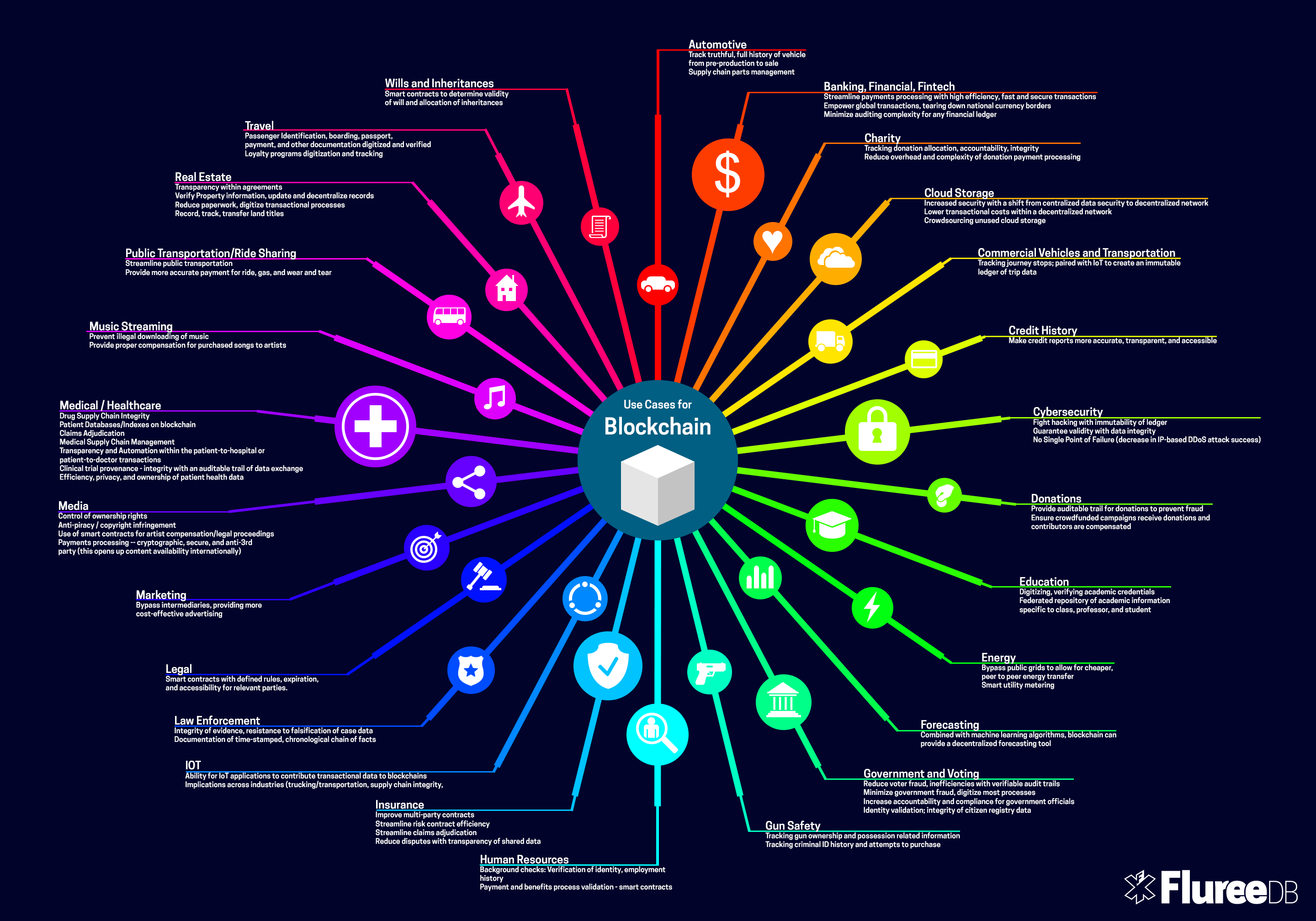
For contrast, here is a graphic I saw on Reddit  (click here for high resolution image) that provided many plausible examples of use cases where blockchain does or could create value.


====

Any sufficiently advanced technology is indistinguishable from magic.
Arthur C. Clarke


In a recent article, Eleni Vasilaki, Professor of Computational Neuroscience at the University of Sheffield, reminded readers that humans tend to be afraid of what they don’t understand. According to Vasilaki, some technological achievements surpass expectations and human performance are to the point that they look unrealistic and surrounded by a ghastly mystery halo.

A common mistake is in considering AI applications singularly and fearing humans to be replaced. Singularity is near, but nearness is relative. Vasilaki points out that AI is task-oriented, while humans are versatile by nature. Human versatility comes from an understanding of the world, and this, in turn, is developed over years. No AI seems likely to achieve this understanding anytime soon. People seem to overlook how much the huge amount of data and computational power available today might be the reason for the success of today’s AI.


Technology panacea

First Man has brought back memories of the debates around the utility of the space program prior to the launch of the Apollo 11 mission to the Moon in 1969. In a paper prepared for IAF’s meeting in Stuttgart in 1952, Wernher von Braun wrote: “When we are asked the purpose of our striving to fly to the moon and to the planets, we might as well answer with Maxwell’s immortal counter question when he was asked the purpose of his research on electrical induction: «What is the purpose of a newborn baby?»” Today, few seem to pay attention to the fact that the impressive technological development of recent years owes almost everything to the space program.

A by-product of the mission to the Moon was the belief that any technological achievement is possible and at hand, and this might be one of the reasons for the cyclical proposition of new technological hypes. As Isabella Massardo reminds, in the last decade, speech-to-speech technology has been a constant hype, while machine translation has reached the plateau of productivity. Blockchain, together with cryptocurrencies or on its own, also has been a hype for a few years now. In 2017, blockchain was already on the verge of disillusionment. In 2018, blockchain (now for data security) is still a hype. Not surprisingly, among the emerging and rapidly accelerating technologies that are listed to be actively monitored as disrupting innovations for being expected to profoundly impact the way of dealing with the workforce, customers and partners, none is directly related to translation.

Indeed, democratized AI might make digital twins closer than blockchain, as hundreds of millions of things are estimated to have digital twins within five years. Actually, according to Gartner, blockchain “has the potential to increase resilience, reliability, transparency, and trust in centralized systems.” The keyword here is “centralized systems,” while it is now pretty clear that the magic word to sell blockchain is “decentralization”.

Unfortunately, the decentralization of business models and processes is definitely not straightforward for most businesses. As a matter of fact, many are still trying to understand what blockchain is and how it works and, more importantly, how it can be utilized for mission-critical applications. Not surprisingly, Gartner anticipates that through 2018, 85% of projects with “blockchain” in their titles will deliver business value without actually using a blockchain. Also according to Gartner, “blockchain might one day redefine economies and industries via the programmable economy and use of smart contracts, but for now, the technology is immature.”

A matter of transparency


Even technology enthusiasts should better be cautious about the prospected use of blockchain in translation. Maybe, translation blockchain enthusiasts might answer a few questions and help clarify:
  1. How is blockchain supposed to solve the perennial problem of interoperability?
  2. How is blockchain supposed to help have more professional translators to match demand?
  3. How is blockchain supposed to open up existing language platforms?
  4. How is blockchain supposed to guarantee security, confidentiality, and privacy?
  5. How is blockchain supposed to cut translation prices further?
  6. How is blockchain supposed to make translation quality quantifiable?
  7. Is the network for translation blockchain open?
  8. How is mining implemented, through PoW or PoS?
  9. Mining for cryptocurrencies requires huge investments; this is why it is rewarded with cryptocurrencies, which are negotiable. Are “tokens” negotiable too?
  10. Given the investment in tokens required, how can users be guaranteed against a lack of transparency and a possible crash?
Contrary to what has been happening in situations where the introduction and implementation of blockchain is advocated, or has been taking place, no one in the translation industry has been asking any of these questions, at least publicly or out loud, and obviously, no answer has been given or anticipated so far.

Interoperability

Presenting interoperability as a dilemma still in 2018 means that the translation industry is far away from maturity. Since inception, the translation industry has been proclaimed to be on the edge of a massive change in how they receive and translate content. Changes have actually happened over the years, coming almost exclusively from outsiders. Major translation buyers have been imposing their own solutions to their own problems with their suppliers who, in cascade, have imposed these solutions to their own vendors. The fragmentation of the industry has effectively prevented the birth of any real industry standards, further encouraging this intrusiveness. Translation industry players have always been so obsessed with the risk of compromising their own little garden and thus rejecting, if not hindering, where possible, any real standardization effort. Major players have been trying, in turn, to take advantage of any standardization initiatives, even those that they themselves advocate, to enforce their own models and maintain what they see, often wrongly, as a competitive advantage.

This attitude is in blatant contrast with any new methodologies, but it has the reassuring effect of keeping players in a sort of comfort zone, allowing them to prevent any “resource dispersion” and contain any losses due to the inefficiencies ensuing from their immobility. This is also why the processes of most LSPs are optimized for small projects, and why organic growth and a critical mass are so hard to achieve. Unfortunately, process efficiency comes from design and technical interoperability is effective only when technology matches processes, not vice versa.

A leap of faith

Everyone working in the translation industry knows the problems permeating it. Listing them is barely a starting point towards a solution whatsoever.

How is “tracing a user’s history” supposed to be “increasing trust for the translator’s ability and capability?” How is the tracking of digital assets supposed to benefit their creators when blockchain in no way can guarantee ownership? A ledger is used to record transactions not to certify the ownership of the assets in each transaction.

Therefore, Kirti Vashee’s doubts here are well expressed: “Everybody involved in blockchain seems to be trying to raise money. The dot-com boom and bust also had, to some extent similar characteristics, with promises of transformation and very little proof that anything that was clearly better than existing solutions. I feel the problem description of the LIC initiative is clear in this overview, but I am still unclear on what exactly is the solution. I would like to see examples of a few or many transactions executed through this blockchain to see how it is different and better before, I cast any final judgment.”
 

A relationship-based industry

The translation industry is an intricate intertwinement of relationships between the businesses, players, publishers, analysts, and consultants governing its economy. In this context, the difference is made by who you know. For this reason, ignoring who Renato Beninatto is tantamount to a lèse-majesté offense and it is not exactly clever for someone in a prominent position to ignore him or, even worse, pretend to ignore him, as Lionbridge’s CEO, John Fennelly reportedly did at LocWorld 38 in Seattle, even though or especially if he comes from another industry and a different experience.
The intertwinement of relationships that characterizes the industry has resulted in exclusive clubs that have their meetings at industry events. Each area of the industry has its own club, and each club has its governance. Occasionally, members of different clubs from different areas mingle, but generally, clubs remain distinct. Some clubs are more numerous or powerful than others and their governance may be assimilated to a mafia, as a young and overly ambitious would-be analyst and consultant named it. He also did whatever it took to join it, and he made it.

As long as you are a member of one of these clubs and share its spirit and its policy, you can be sure that any initiative you take will not be hindered, far from it. No one will ever challenge you or even ask you any embarrassing questions.

Openness and negotiability

For this very reason, though, the questions on the openness of the blockchain network and the negotiability of tokens are fundamental. Blockchain may have the potential to increase resilience, reliability, transparency, and trust in centralized systems, but the most powerful promise of blockchain is about decentralization. Being extremely clear on the openness of the blockchain network and on the associated protocols is paramount.

Clarifying the negotiability of “tokens” is equally crucial. Indeed, more and more often, “investment” is the other word accompanying cryptocurrencies, even though, in principle, they are not supposed to generate returns; after all, it’s just software. But they are used also to purchase goods having a counter value in fiat money and are then negotiable. Bitcoin, for examples, can be converted into cash, using a Bitcoin ATM or a Bitcoin debit card or via an online service. Joining a token-based translation blockchain network would require an initial investment in tokens, whether on a barter exchange for data or in fiat money. If tokens are distributed by a centralized entity, this entity would most probably be asking people to purchase tokens. Even though any new users that would join the network won’t fund older users, the founders will end up being the richest ones guaranteed, as in a typical Ponzi scheme: The more people join, the more the founders will earn. And this is the only way they can make money. From nothing, as the only asset of founders is the network. Their net worth would be in fiat currency while the members of the network would not be able to cash their tokens after having bestowed their data assets to the network, and if the network crashes they might be dumped with nothing.

Finally, with merger or acquisition accounting for growth at 3 of the top 5 fastest growing LSPs for 2018 it is hard to believe that these will join the blockchain network anytime soon. And, by the way, there has always been only one man in black.

Beyond baloney

The comparison with the automotive industry and the car is definitely out of scale, but it is true that translators too use only a fraction of the many features available in any translation software tool. Also, the automobile is now a general purpose technology and the only possible comparison might be with the smartphone.

Yet, although “augmented translation” is just diverting marketing crap, if democratized AI will make any sense, it will help redefine the value of linguists rather than taking jobs away from them.
Arthur Clarke’s famous quote above explains why technology is outpacing our ability to comprehend what we can do with it. The next new thing in the translation industry will very soon be conversational agents and virtual assistants rather than blockchain.


Virtual assistants, aka chatbots or bots, already are or are going to be the bridge between technical documentation teams and customer support and power most customer service interactions. Indeed, technical support is the most common type of chatbot content, and bots are said to be the new FAQ.
Technically speaking, there are two kinds of virtual agents:
  • One kind is scripted. It can respond only to questions that it was programmed to understand.
  • Another uses AI, so it can understand what the customer is telling it, and its knowledge grows the more it interacts with people.
The issue, today, is how to prepare, organize and structure content so that chatbots can use it.
Translation industry players, from each side of the fence, have learned to reuse content, while CMS systems are still underused, especially for single-sourcing. The next challenge for content producers is to extrapolate answers to customer questions from a unified set of content modules delivered across channels, rather than creating new batches of (largely duplicated) content or recreating content by copying and pasting existing content from their CMS into a form that chatbots can use.

More technical authors will be needed accustomed to single sourcing through CMS. Will they be translators accustomed to leveraging past translations using TMs?

In fact, Microsoft has already issued a new chapter of its style guide devoted to writing for chatbots.

The main components of chatbots are four:
  1. Entities
    The “things” users are talking about with a chatbot; they can be inherited from taxonomy nodes in a CMS.
  2. Intents
    The goal of a user’s interaction with a chatbot; it can be mapped as content elements in a CMS and be defined as primary and alternate questions.
  3. Utterances
    The (unique) questions or commands a user asks a chatbot.
  4. Responses
    The answers the chatbot returns to utterances; they can be defined in a CMS.
The coming future authoring skill consists in breaking existing content into smaller, modular chunks within CMSs, to achieve COPE (Create Once Publish Everywhere), the new holy grail.

And if dealing with Conversational UI, the new challenge will be writing dialogues. This will require the skills of a UX writer and a creative writer. Ready Player One?

=======================


Luigi Muzii's profile photo


Luigi Muzii has been in the "translation business"  or "the industry" since 1982 and has been a business consultant since 2002, in the translation and localization industry through his firm. He focuses on helping customers choose and implement best-suited technologies and redesign their business processes for the greatest effectiveness of translation and localization-related work.

This link provides access to his other blog posts.